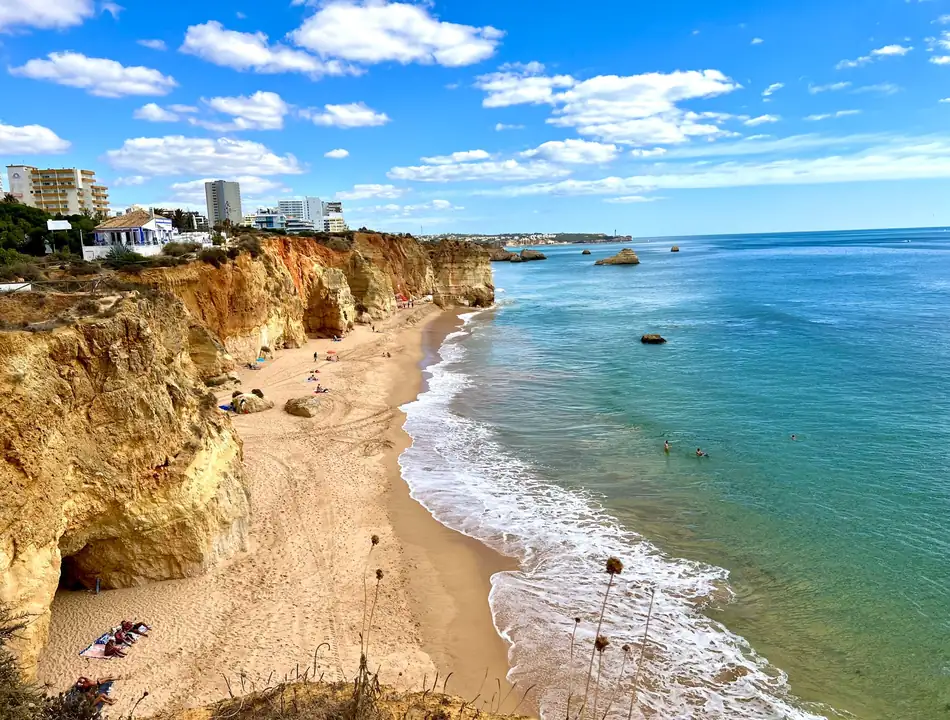
 Cliff cove
Praia da Marinha
LagoaCentralBlue Flag
Golden arches and snorkel-clear water — the most photographed beach in the Algarve, with a clifftop trail past Benagil.
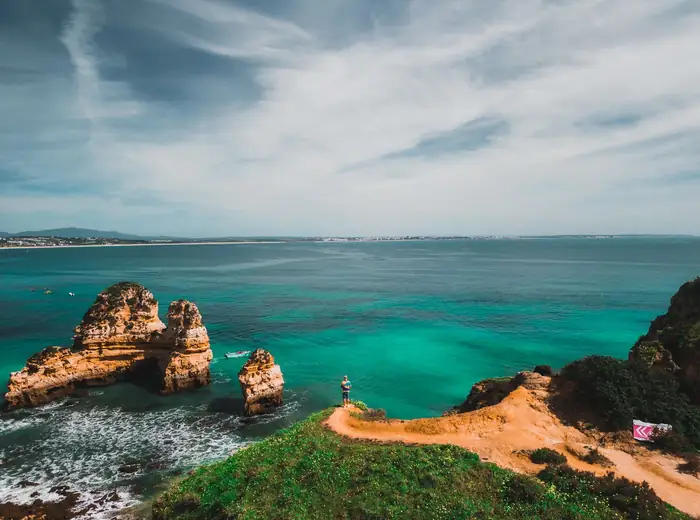
Cliff-backed coves, warm island sandbars and long golden town beaches — filter the Algarve's best by area, type and who you're travelling with.
The Algarve has three kinds of beach along its ~150 km of coast: cliff-backed coves in the centre and west (Marinha, Camilo, Dona Ana), long island sandbars in the east (Ilha de Tavira, the Ria Formosa), and big, lively town beaches like Praia da Rocha. Most fly a Blue Flag, and the sea is warmest in September.
Tap the filters to narrow by the kind of beach, the area, and who you're travelling with.
Cliff coveGolden arches and snorkel-clear water — the most photographed beach in the Algarve, with a clifftop trail past Benagil.
 Cliff cove
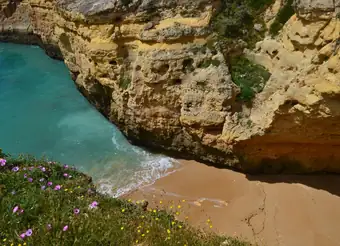
A wooden stairway drops to twin sheltered coves and clear water — small, calm and best reached early.
 Cliff cove
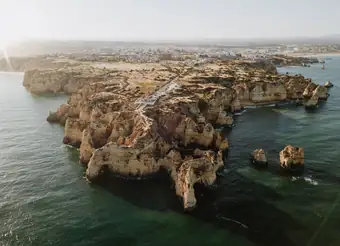
Cliff-backed, calm and photogenic, a short walk or water-taxi from Lagos marina.
 Town beach
A vast, walkable town beach with a boardwalk, bars and boat departures — busy, easy and full of life.
 Island
A barrier-island beach of dunes and warm, shallow water — reached by a short ferry from Tavira.
 Long sands
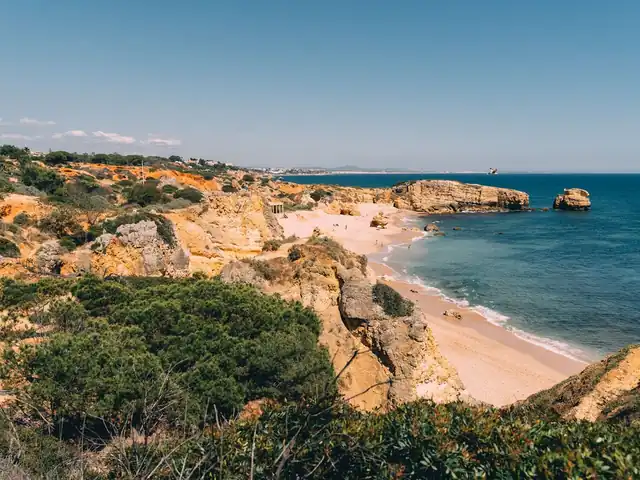
Kilometres of ochre cliffs and umbrella pine above soft golden sand — one of the region's longest beaches.
 Cliff cove
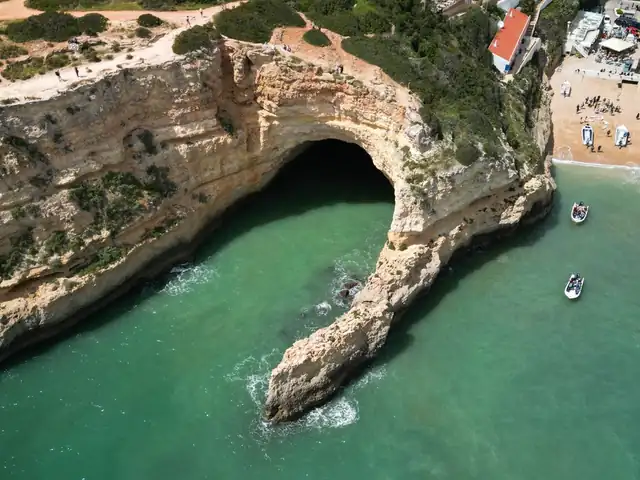
The small beach beside the famous domed sea cave — the launch point for grotto boats and kayaks.
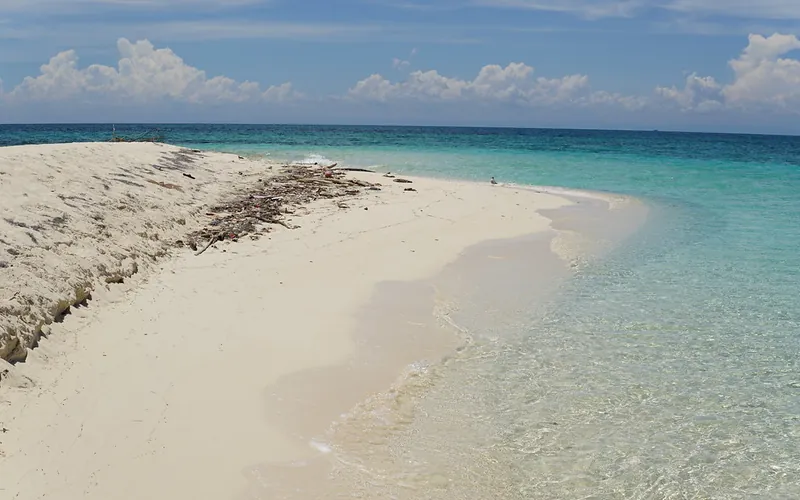 Wild island
A wild, empty island off Faro in the Ria Formosa — dunes, birdlife and a single restaurant, by boat only.
 Surf beach
A wide, wild Atlantic beach on the west coast — a surf-school favourite, with real swell from autumn on.
Long sandsLagos's long, soft sweep of sand — room to walk, windsurf and paddleboard well away from the crowds.
IslandA calm sandbar beach reached by a two-minute ferry across the lagoon from the Cabanas waterfront.
Family sandsA long, gently shelving family beach backed by a birdwatching lagoon, between Albufeira and Armação de Pêra.
Golden arches, and water you can see straight through.Praia da Marinha · Central AlgarveSee Praia da Marinha tours →
Full guide
The cliff coves, the island beaches, flags & safety, and where to base yourself
Along its ~150 km of Atlantic coast the Algarve serves up three quite different kinds of beach, and knowing which is which saves you a lot of driving. The finder above filters them by type, area and who you’re with — this guide explains each in turn.
The Algarve’s signature is its ochre limestone: a run of cliff-backed coves and sea stacks across the centre and west. Praia da Marinha near Lagoa is the postcard — golden arches, snorkel-clear water and the clifftop Seven Hanging Valleys trail that links it to Benagil. Around Lagos, Praia do Camilo and Dona Ana hide beneath wooden stairways, while the honey-coloured stacks of Ponta da Piedade are best seen by kayak. These coves are small, so arrive early in July and August.
East of Faro the cliffs give way to the Ria Formosa, a lagoon shielded by low barrier islands of dune and warm, shallow sand. Ilha de Tavira and the sandbar at Cabanas are a short ferry hop; the wilder Ilha Deserta off Faro has a single restaurant and nothing else. The water here is calmer and warmer than the west, which makes the east the region’s best for young families and for anyone who wants space.
If you want sand by the kilometre with bars, boardwalks and easy parking, head for the big beaches: Praia da Rocha at Portimão, Praia da Falésia below Albufeira, and Lagos’s Meia Praia. They absorb crowds easily and suit families who want facilities on tap.
The west and south-west — the Costa Vicentina natural park — is where the Atlantic hits hardest. Beaches like Amado, Arrifana and Bordeira are surf country, quieter and cooler, with strong currents; swim only where a lifeguard flies a green flag.
Most popular beaches are lifeguarded in summer and many hold a Blue Flag for water quality and facilities. Always read the flags before you swim, mind the Atlantic’s currents and cool water, and check the tide on cove beaches, where the sand can shrink at high water.
| Flag | What it means |
|---|---|
| Green | Safe to swim, lifeguard on duty |
| Yellow | Swim with care — no floats, stay in your depth |
| Red | No swimming — dangerous conditions |
| Blue Flag | An award for water quality, safety & facilities |
The sea lags the air, so it is warmest in September; spring and early autumn give you the coves with room to breathe. In peak summer, reach the small cliff coves early or after 5 pm, and lean east to the islands or west to the Costa Vicentina for genuine space.
| Area | Character | Beaches to know |
|---|---|---|
| Barlavento (West) | Cliff coves & wild surf | Camilo, Dona Ana, Amado, Meia Praia |
| Central | Postcard coves & big beaches | Marinha, Benagil, Falésia, Rocha |
| Sotavento (East) | Warm island sandbars | Ilha de Tavira, Cabanas, Ilha Deserta |
For the cliff coves, base in Lagos, Carvoeiro or Portimão; for long sands and facilities, Albufeira or Vilamoura; for the warm island beaches, Tavira in the east. Wherever you land, we point you to real, hand-checked homes booked direct with Homing — no platform fees. Compare towns in the destinations guide, then choose where to stay.
The best eastern beaches sit on barrier islands with no road access — here is how to get there.
For scenery, Praia da Marinha near Lagoa is the classic pick — golden arches and clear water, regularly rated among Europe's best. For calm, warm, family-friendly sand, the eastern island beaches like Ilha de Tavira are hard to beat.
The eastern island beaches (Tavira, Cabanas) have warm, shallow, calm water ideal for children, and big beaches like Falésia and Rocha have full facilities. Praia dos Salgados near Albufeira shelves gently and has a lagoon to explore.
Head east to the wild Ilha Deserta off Faro, or west to the Costa Vicentina — Amado, Bordeira and the coves around Sagres stay calm even in peak week. Small cliff coves are quietest early in the morning.
Popular beaches are lifeguarded in summer and flagged: green means safe, yellow means care, red means no swimming. The Atlantic is cooler and can have strong currents, especially on the exposed west coast — always swim near a lifeguard.
A car helps for the cliff coves and the west coast, but the island beaches are reached by ferry from towns like Tavira and Faro, and the big town beaches are walkable from their resorts. Boat tours also reach many cove beaches from the water.
September — the water temperature lags the air, so late summer and early autumn give you the warmest sea, often with thinner crowds than July and August.
The west and south-west coast — Praia do Amado, Arrifana, Bordeira and the beaches around Sagres on the Costa Vicentina. Surf schools run for beginners in summer, with the biggest swell from autumn to spring.
Not on foot — the cave is reached only from the water, by boat, kayak or SUP from Benagil or Carvoeiro. The small Praia de Benagil beside it is the launch point. See our things to do guide for how to visit.